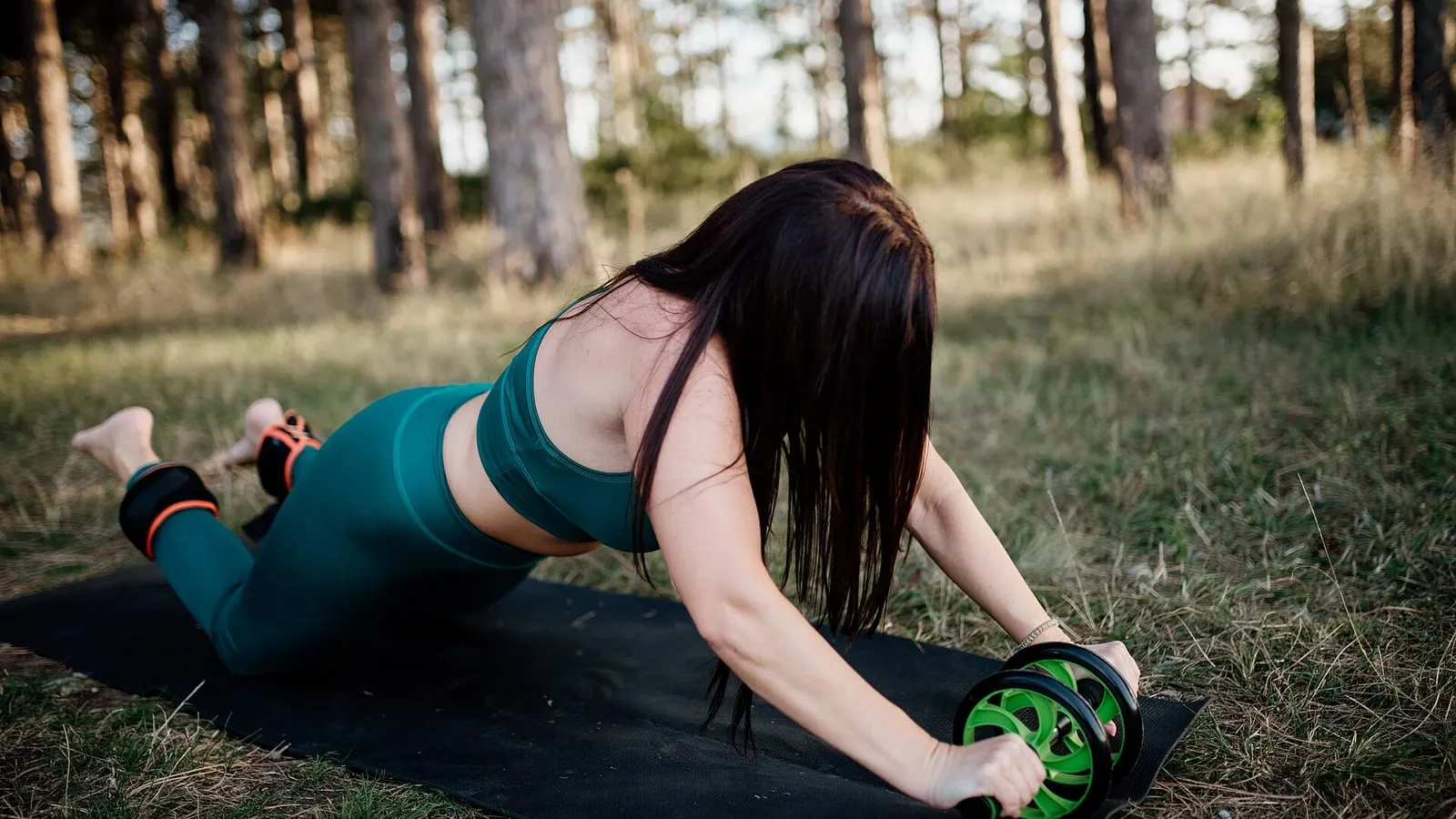
Well-fitting activewear is not simply tight or loose. It is a garment that stays where you put it through the whole range of your movement. The test is not a mirror; it is a squat, a reach and a rotation.
Fit is about the garment following you#
Every activewear garment has to do a job while you move: cover the body, stay in place and not restrict a joint. Those requirements pull against each other. A garment cut tight enough to stay in place can limit a squat; one roomy enough to move freely can ride up or slide down.
Fit is the balance you choose between those demands for your body and your sessions. It is also personal in a way size charts cannot capture, because two people with the same measurements can have very different torso lengths, hip shapes and shoulder widths.
Fit also changes with the fabric. A knit with elastane will follow your body; a woven with little stretch will not, and needs to be cut with more room. Fit and fibre are one decision, not two.
Movement tests to run in the changing room#
Most fitting rooms have enough space for four tests, and they take under a minute. First, squat as deep as you can and hold it: check that the waistband does not slide down, that the fabric over the knee does not pull tight enough to restrict, and that nothing goes sheer.
Second, reach both arms overhead and then across your body. Check that the top does not ride up past a point you are comfortable with, and that the armhole does not cut into the shoulder. Third, take a long lunge and a side step, watching for pulling at the hip and for a waistband that rolls. Fourth, sit down on the bench and lean forward; this is where a narrow or badly shaped waistband reveals itself.
Tops: shoulders, armholes and hems#
The shoulder seam should sit near the end of your shoulder bone, not below it, unless the garment is deliberately cut as a drop shoulder. A seam that sits beyond the shoulder will restrict you when you press overhead, and a seam that sits well inside it pinches.
The armhole is the detail we check most often. A tight, high armhole looks tidy on a hanger but limits the shoulder. A raglan construction or a slightly lower armhole gives more range. If the top has a racerback or strappy back, check that the straps do not press on the shoulder blade or the side of the neck when you move.
Hems matter differently by activity. A hem that hits at the widest part of the hip will ride up when you raise your arms. A slightly longer or shaped hem, or a top that grips lightly at the hem, will stay put.
Bottoms: rise, waistband and gusset#
Rise, meaning how high the waistband sits, is the single biggest fit variable in bottoms, and it is not about fashion. A rise that sits below the point where your hip creases when you squat will slide down. A rise that sits at or above the natural waist stays better, especially in high-movement sessions.
Waistband construction matters more than its width alone. An encased elastic band, where elastic is sewn inside a fabric tube, distributes pressure and resists rolling. A narrow exposed elastic band digs in when you sit or fold, and a knit band with no elastic depends entirely on the fabric’s recovery, which can fade with wear. A drawcord inside the band lets you adjust, but only if the band itself is already close to the right size.
Check the gusset, the extra panel in the crotch of shorts and tights. A gusset removes the seam that would otherwise run through the highest-stress point, and it also improves range of motion. Look for flat seams around it, since a raised seam in that area is felt immediately.
Snug versus compressive#
There is a difference between a garment that fits closely and one engineered to compress. A close fit means the fabric follows your shape without needing to be adjusted. Compression means the fabric is designed to exert a graduated pressure on the limb or the torso, and it usually uses a denser knit with more elastane.
Compression garments have a place, particularly for people who like the feel or who have been advised to use them, but they are not automatically better. A compressive garment that is too small restricts movement, and one that is too large loses the pressure it was built for. If you do not want compression, a well-cut close-fitting knit will serve you better than a poor version of a technical one.
Length, coverage and opacity#
Length is where fit and coverage meet. Tights that end just below the knee can bunch at the joint; those that end at the ankle can pull when you bend. Shorts with a fitted liner need the liner to be long enough to stay clear of the inner thigh, which is why many people prefer a longer inseam for running than for lifting.
Opacity is partly a fabric weight question and partly a stretch question. A thin knit stretched over a bent knee or a folded hip can become translucent. To test it, bend and hold the position in a well-lit changing room, and look at the fabric against the light.
When to size up, and when not to size down#
Size up when a garment restricts movement: when the armhole limits your reach, when the waistband will not stay put, or when the fabric goes tight enough to shine and go sheer. The next size up in a well-cut piece is usually still close-fitting.
Do not size down to get a tighter feel from a knit that is not built for it. Sizing down compresses the elastane further, which speeds up the loss of recovery, and it puts strain on seams that were not designed for it. A garment bought too small tends to fail at the seams first.
Signs a garment will not stay in place#
Some warnings show up in the changing room before you ever train in the garment. A waistband that rolls the moment you bend will keep rolling. Fabric that springs back slowly when you stretch it and release has weak recovery. A hem that flips up when you lift your arms will flip up in the gym. A shoulder seam that sits off your shoulder will not settle later.
If any of those appear, the honest answer is that no amount of adjusting will fix them, and the garment belongs back on the rail.
Fitting as a habit#
The most useful thing you can do is treat the changing room as a testing ground. Give it two minutes of real movement and you will learn more than from another ten minutes of looking. Fit determines whether you wear a piece thirty times or three, and it is the part you can judge for free before you pay.