Technical garments have more working parts than a cotton T-shirt. They rely on stretch fibres that recover, on finishes that move moisture, on laminates and taped seams that resist water, and on zips and elastic that hold the fit together. Each of those parts has a different weakness, and how you wash and dry a garment determines how long each one lasts.
Why technical garments fail early#
Every property you paid for is a separate mechanism, and they fail at different rates. Elastane loses recovery with heat and chlorine. Wicking finishes wear away with friction and detergent residue. Water-repellent finishes are abraded and clogged. Elastic in waistbands gives up gradually. Seams at the highest-stress points open when the thread is weaker than the load.
Understanding that list is what turns care from a chore into a decision. Most care rules exist to protect one specific mechanism, and knowing which one makes the rules easier to remember. The most common failure is not a hole: it is a garment that still looks fine but has stopped working, staying damp, losing its shape, or carrying a smell that survives washing.
Sort before you wash#
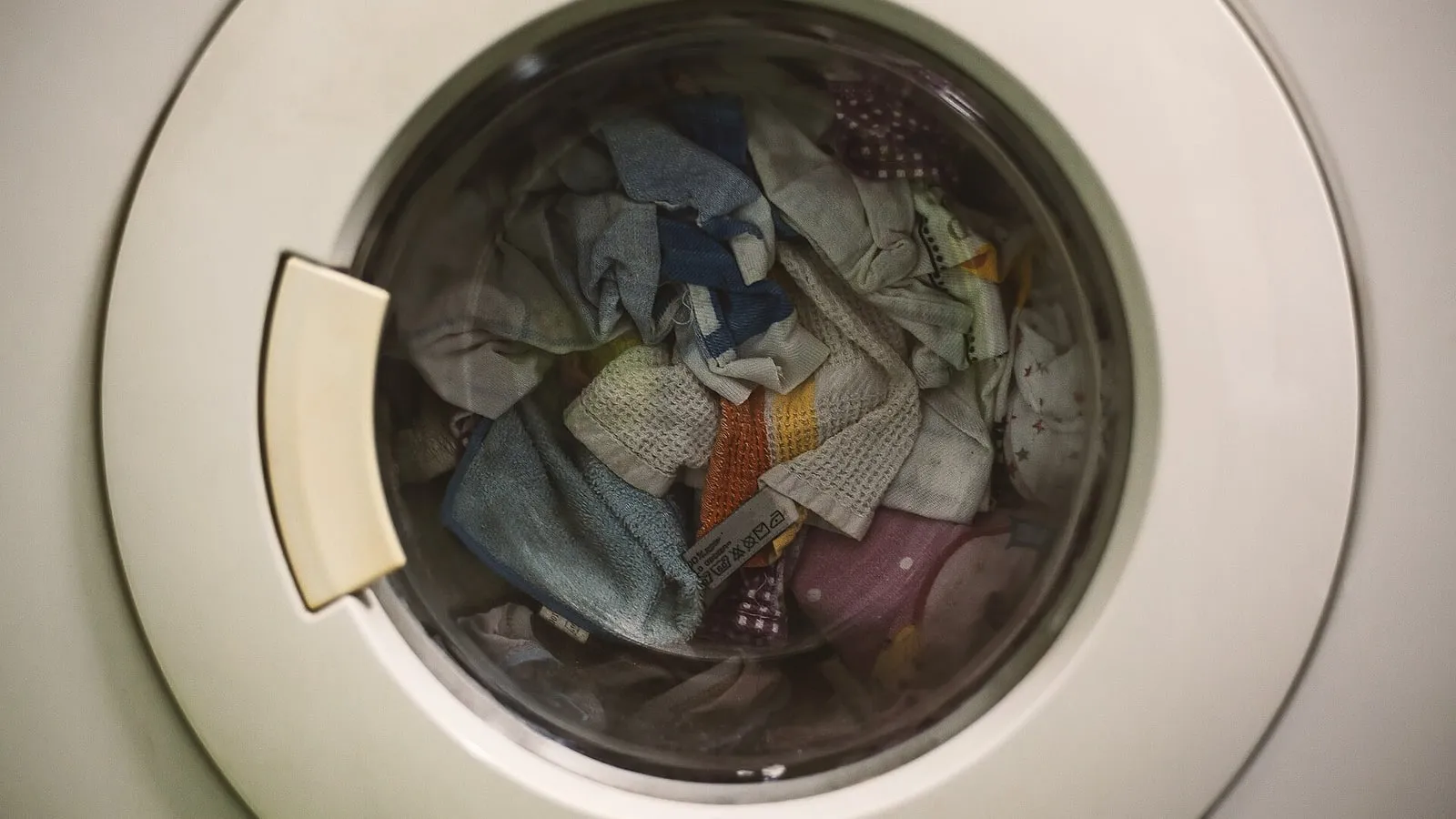
The first step is separation, and it is not about colour. Wash technical fabrics with other technical fabrics where you can, because they share the same needs: cooler water, gentler agitation and no fabric softener. Towels and denim abrade technical knits and leave lint behind.
Two specific hazards are worth planning for. Velcro hooks snag any knit they touch, so close all fastenings before washing or use a mesh laundry bag. Zips left open can catch and tear other garments, so close them too. Small items like socks get lost inside larger garments and trap detergent, so a bag for them helps.
Washing: temperature, load and detergent#
Heat is the enemy of elastane, wool and most applied finishes. A cool or warm wash on a gentle cycle is enough for garments worn for a single session, and it is much kinder than a hot wash. Fill the drum loosely rather than packing it, because technical fabrics need room to move, and overloading increases friction.
Use a small amount of a mild liquid detergent. Powder detergents can leave residue in dense knits, and residue blocks the very properties you paid for. If a garment is heavily sweated and odorous, wash it sooner rather than letting it sit, because oils and bacteria bond to synthetic fibres over time, and a smell that has set is difficult to remove.
What fabric softener does to a technical fabric#
Fabric softener works by coating fibres with a lubricating film. On cotton that feels pleasant. On a technical knit it blocks the surface that moves moisture, reduces the effect of any wicking finish, and leaves a waxy residue that traps odour. It makes technical fabric feel soft and work worse.
Softener also builds up on water-repellent finishes, so they stop shedding water. If you have been using it and your kit feels clammy, run the garments through a couple of plain washes with mild detergent and no softener, and the residue will gradually wash out.
Drying and the problem with heat#
Tumble drying on high heat is the fastest way to shorten the life of a technical garment. It degrades elastane, which is what causes a legging to go baggy at the knees and seat. It can shrink wool and destabilise laminates and taped seams. Repeated heat also dulls water-repellent finishes.
Line drying or a low-heat tumble is the safer default. Hang garments in shade rather than direct sun, which fades colour and degrades some fibres over time. Dry wool and heavy knits flat, so they do not stretch out of shape under their own weight, and make sure garments are fully dry before they go back in a drawer, because damp storage is how technical kit develops a permanent smell.
Storage and rotation#
Store clean, dry kit loosely folded rather than compressed in a tight drawer, and keep it out of damp spaces. Hanging heavy tights can stretch them at the waistband over time. If you train most days, rotation is the quiet advantage: two or three sets worn in turn have time to dry fully and need less frequent washing than one set worn constantly, and they also share out the abrasive wear.
Keep a separate place for wet or used kit, ideally a ventilated bag, so it does not sit against clean clothes.
Repairs worth making#
Small repairs extend a garment’s life more than any care habit. A loose seam at a stress point can be restitched before it opens further. A snagged thread should be pulled to the inside and secured rather than cut, because cutting a snag in a knit allows the loop to run. Waistband elastic can sometimes be replaced if the band is encased rather than bonded into the fabric.
Pilling on a knit can be removed with a fabric shaver, though pilling usually signals abrasion and the pills will return. Loose stitching on a load-bearing seam is a warning rather than a cosmetic problem, and it is worth fixing before the seam fails mid-session.
Chlorine, sunscreen and deodorant#
Chlorine degrades elastane quickly and can leave swimwear brittle and dull. Rinsing swimwear in cool fresh water immediately after use removes most of what does the damage, and drying it away from heat and sun extends its life further. Repeated chlorinated training will always shorten the life of a stretch garment, and the honest approach is to treat swimwear as a consumable and buy accordingly.
Sunscreen and some skincare products contain oils that can stain lighter fabrics and that are hard on elastane. Deodorant and antiperspirant can build up on the underarm area, discolour fabric and stiffen a knit. Where you can, apply these before dressing and let them dry, rather than applying them over the garment.
Knowing when a garment is finished#
A garment is finished when it no longer does its job: when a stretch knit stays baggy after washing, when a water-repellent shell wets out immediately, when the seams have gone and the fabric has thinned past the point of repair, or when it holds an odour no washing removes. Retiring a piece at that moment is not waste; it is the end of a useful life that a good routine made longer. Buying a little less and caring for it properly generally costs less over a year than replacing cheap kit often, and the care instructions on a label are the cheapest part of the purchase and the part most often ignored.