A legging that felt firm in the shop and baggy over the knees in three months has not worn through. It has lost recovery, which is a different failure from a hole or a broken seam and a much harder one to see on a rail. The fabric still stretches as far as it ever did. What it no longer does is come back.
Stretch and recovery are usually described as one property, and they are two. Stretch is how far a fabric extends under load. Recovery is how completely and how quickly it returns to its original dimensions when the load is removed. A fabric can have a great deal of stretch and poor recovery, which is the standard profile of an inexpensive cotton-elastane rib. It can also have modest stretch and excellent recovery, which is common in a firmly knitted technical knit with a low elastane content. Which of the two a garment needs depends on what it is asked to do, and the knee, the seat and the waistband are where the difference shows.
Elastane and how it fatigues#
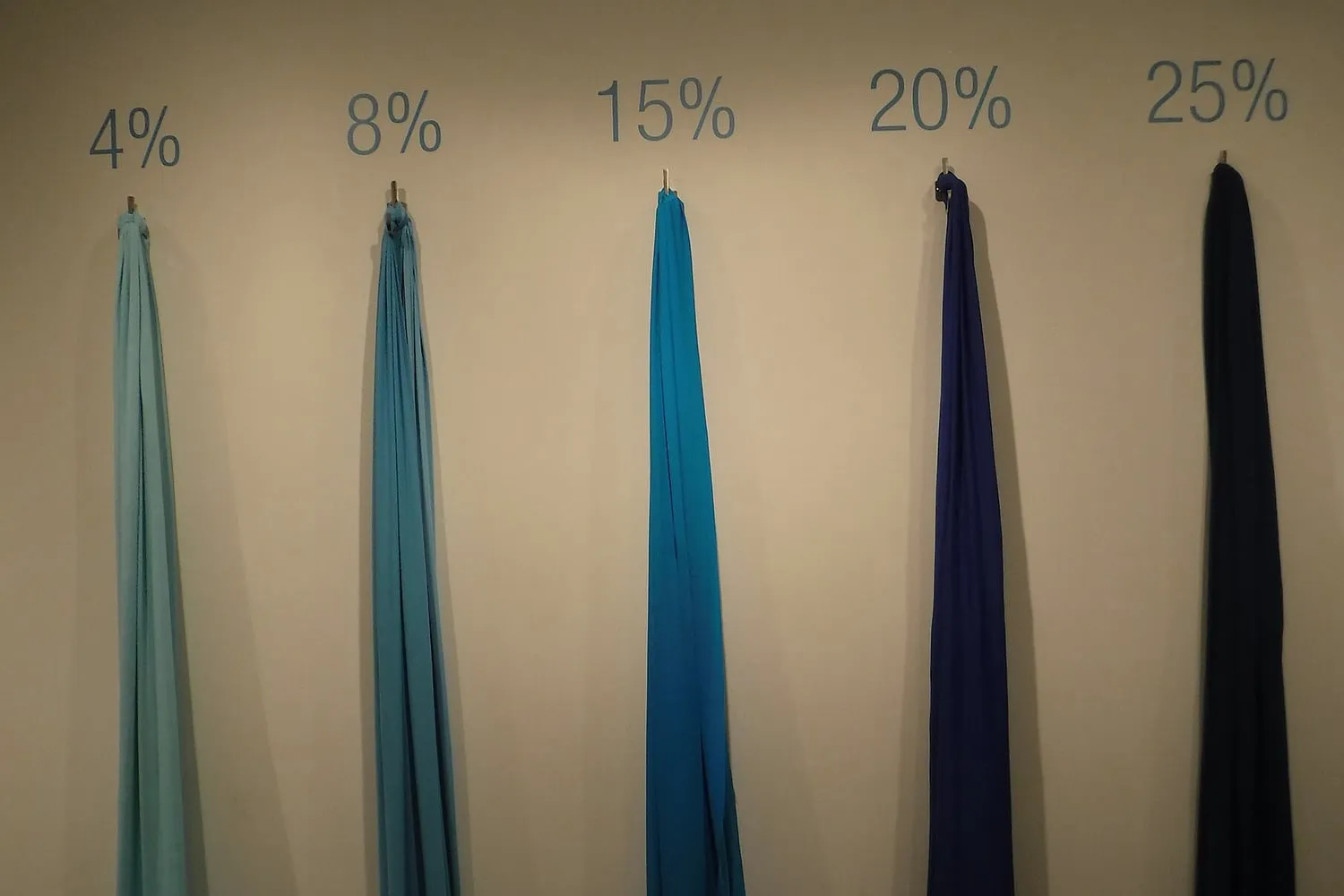
Elastane, sold in some markets as spandex, is the fibre that provides most of the recovery in activewear. It appears at a low percentage, commonly between about five and twenty per cent, and that percentage is worth reading on the label.
Recovery comes from the molecular structure of the fibre, which is engineered to unfold and refold. Repeated cycling through that motion causes fatigue: the fibre gradually stops returning fully, and the garment takes on the shape it was held in. Heat accelerates this. Chlorine accelerates it. Oils in sunscreen and some skincare products accelerate it. The fibre near a garment’s stress points, the knees, the seat and the front of the waistband, fatigues first because it is cycled most.
A higher elastane content buys more stretch and a firmer initial feel, and it does not buy more durability. The more the elastane is relied upon, the more the garment’s shape depends on the component that fails earliest.
The loop: knit structure and how it matters#
The second source of stretch is the knit structure itself, which is why fibre content alone does not predict whether a garment will go baggy.
A single jersey is a looped structure that stretches readily in both directions and recovers through the geometry of the loops as well as through elastane. An interlock has two interlocking faces, which makes it thicker, more stable and less prone to curling, and it recovers well without relying entirely on the stretch fibre. A rib knit has deep vertical wales and stretches far more around the body than along it, which is why it is used for cuffs and waistbands where a firm, localised grip is wanted. Power mesh is a dense, high-modulus knit, often used in panels, built for compression rather than softness.
Denser knits with tighter loops usually hold shape better, because the loops support each other and there is less room for yarn to migrate. A loose, open knit with the same elastane content will sag sooner.
Wovens, laminates and where stretch comes from#
Not all stretch fabric is a knit. A stretch woven, used in training shorts, trousers and some outer layers, gets its give from elastane distributed among interlaced yarns rather than from loops. Wovens are more abrasion-resistant and hold their shape firmly, and they recover less forgivingly than a knit, which means a woven garment that has been overloaded stays stretched.
Some stretch comes from the yarn itself, in the form of bicomponent or textured yarns that coil and uncoil. These hold up better to heat and chlorine than elastane but deliver a lower level of stretch, which suits light support rather than compression.
Heat, chlorine and what to avoid#
The influences that destroy recovery are well established and mostly avoidable.
- Tumble drying on a hot setting. The most direct cause of a garment going baggy, because heat sets the relaxed state of the fibre in whatever configuration it is in.
- Chlorinated pools. Chlorine degrades elastane chemically, so swimwear used regularly in a pool has a shorter life than the same fabric used in fresh water.
- Hot washing. Warm water is usually enough for a single session of wear, and cool is kinder.
- Sunscreen and body oils. Oils act on the fibre and also build up in the fabric.
- Fabric softener. It coats the fibre and does nothing for the property being protected.
- Storing damp. Damp storage does not directly destroy elastane, and it does drive the bacterial growth that damages fabrics and sets odour.
Washing at a cool temperature, using a mild detergent without softener, and drying flat or on a low setting covers most of the risk.
Testing recovery before buying#
Recovery can be assessed in a fitting room in under a minute, and it is the most useful test available because the property cannot be judged by touch.
Take a section of the garment at the thigh or the upper arm between two hands and stretch it firmly across the width, holding for a few seconds. Release and watch. Fabric that returns to its original width promptly is doing the job. Fabric that stays expanded, or creeps back slowly over several seconds, has weak recovery already, which usually means the elastane content is high relative to the knit stability or that the fabric has already aged.
Then run a second test on the parts that matter: the waistband, the cuff and the strap. Pull the waistband sideways and release it, and check whether it snaps back or stays flared. A band that stays flared in a new garment will get worse.
Finally, look at a garment that has been worn by someone else where possible, or at a returned item, since used fabric shows the failure honestly. A legging that is baggy at the knee on the rail will be baggier after a month.
Judging a garment for shape retention#
The practical rule is to buy the least elastane that does the job, supported by the densest knit available in that style. A firm interlock with around ten per cent elastane will usually outlast a very stretchy fine jersey with twenty per cent, and it will feel firmer rather than softer.
Two further checks are worth making at the rail. Look at the seams at high-stress points, since a seam that has been stretched past its thread’s capacity will pucker. Then check whether the garment has been cut with elastane running in both directions or only one, which is often visible as a rib direction or a two-way stretch claim on the care label.
Care then does the rest. A cool wash, no softener, no hot tumble dry and no chlorine will keep the elastane working for its full life, and the shape will hold for as long as the fabric does. When the recovery has gone, the seam integrity and the wicking finish usually follow within a few months, and the garment belongs in a donation bin or a rag pile rather than a drawer.